Physical Address
304 North Cardinal St.
Dorchester Center, MA 02124
Physical Address
304 North Cardinal St.
Dorchester Center, MA 02124

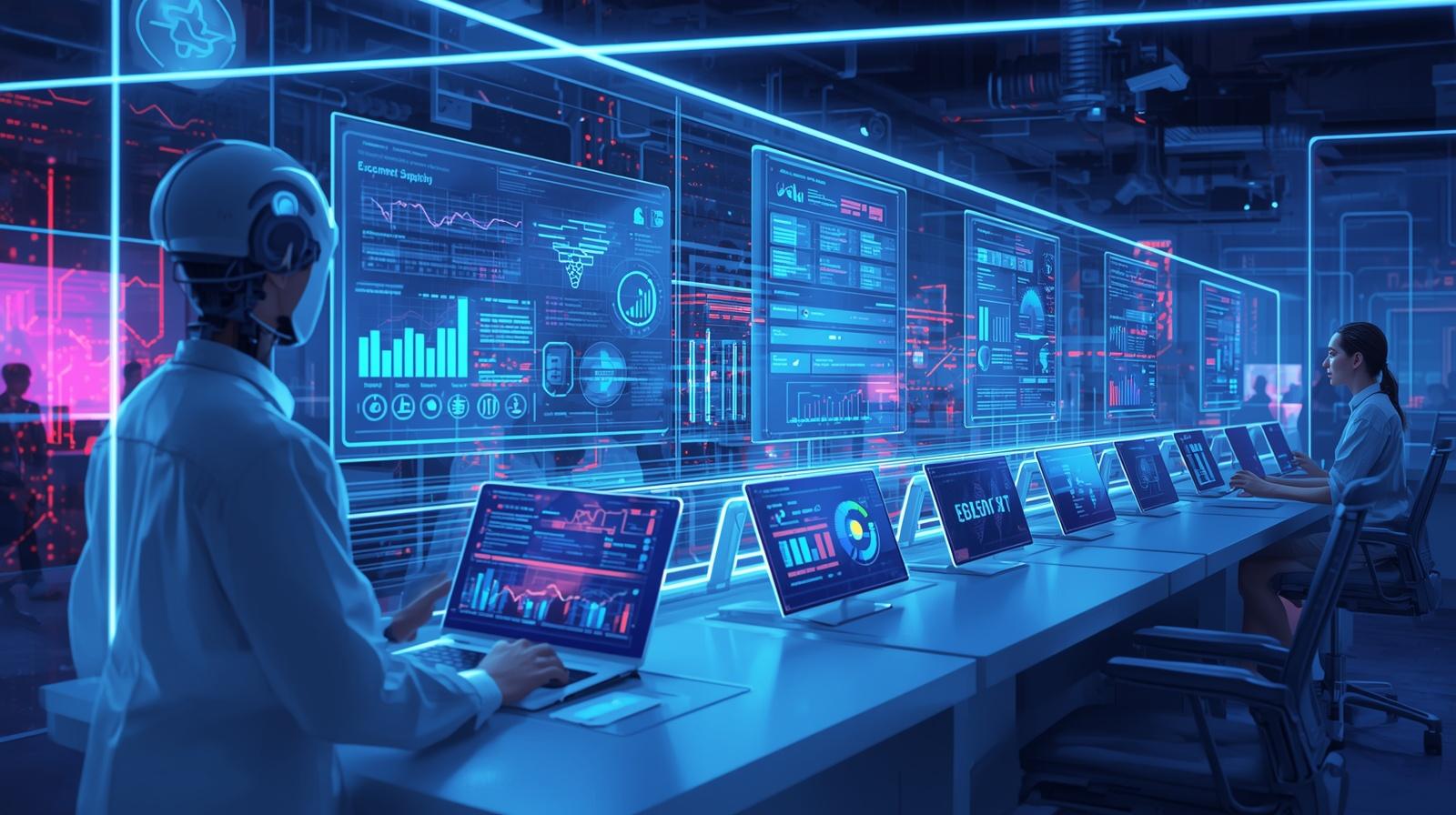
The digital business landscape is changing rapidly as organizations adopt artificial intelligence, cloud technologies, automation platforms, and advanced analytics systems to improve operational performance. Businesses today must manage increasing customer demands, complex workflows, cybersecurity risks, and massive amounts of operational data while remaining agile and competitive.
AI agents are emerging as one of the most important technologies driving this transformation. These intelligent systems can automate tasks, analyze information, make contextual decisions, and continuously improve through machine learning. Unlike traditional automation systems that depend on fixed operational rules, AI agents can adapt to changing business environments and provide real-time support across multiple functions.
Organizations across industries are now using AI agents to improve customer experiences, strengthen cybersecurity, automate workflows, optimize IT operations, and improve business intelligence. As companies continue accelerating digital transformation efforts, AI agents are becoming essential tools for building smarter and more scalable business operations.
Businesses generate enormous amounts of operational and customer data every day. Managing this information manually often slows productivity and reduces operational efficiency.
AI agents help organizations improve:
AI-powered systems can process information quickly while operating continuously, allowing organizations to improve productivity and respond more effectively to changing market conditions.
One major advantage of AI agents is their ability to automate repetitive and time-consuming operational activities. Employees can focus more on strategic planning, innovation, and customer relationship management instead of manual administrative tasks.
Organizations that successfully implement AI agents often improve agility, operational scalability, and business responsiveness.
Modern organizations rely heavily on data-driven insights to support operational and strategic decisions. However, analyzing large volumes of information manually can delay decision-making and reduce visibility.
AI agents help businesses analyze trends, monitor operational performance, identify anomalies, and generate predictive insights in real time. These capabilities improve planning accuracy and help leaders make faster and more informed decisions.
AI-powered systems are also increasingly used for cybersecurity operations. Organizations use AI agents to monitor infrastructure performance, detect threats, automate incident response, and improve operational resilience.
These intelligent systems improve visibility across enterprise environments while reducing downtime risks and strengthening business continuity strategies.
Although AI agents provide significant operational benefits, businesses must address several important implementation challenges.
Organizations must ensure sensitive operational and customer data remains secure.
Employees may require AI literacy and onboarding support.
Older systems may not support advanced AI-powered workflows effectively.
Organizations should establish responsible AI usage policies and oversight frameworks.
A strategic implementation roadmap helps businesses reduce operational risks and improve adoption success.
AI agents are becoming the future of smart business operations by improving automation, strengthening business intelligence, accelerating decision-making, and optimizing enterprise workflows. Organizations that strategically adopt AI agents are building more agile and future-ready digital environments capable of supporting long-term innovation and operational growth.
As AI technologies continue advancing, businesses that combine intelligent automation with strong governance, cybersecurity strategies, and human expertise will be better positioned to achieve sustainable success in increasingly competitive digital markets.