Physical Address
304 North Cardinal St.
Dorchester Center, MA 02124
Physical Address
304 North Cardinal St.
Dorchester Center, MA 02124

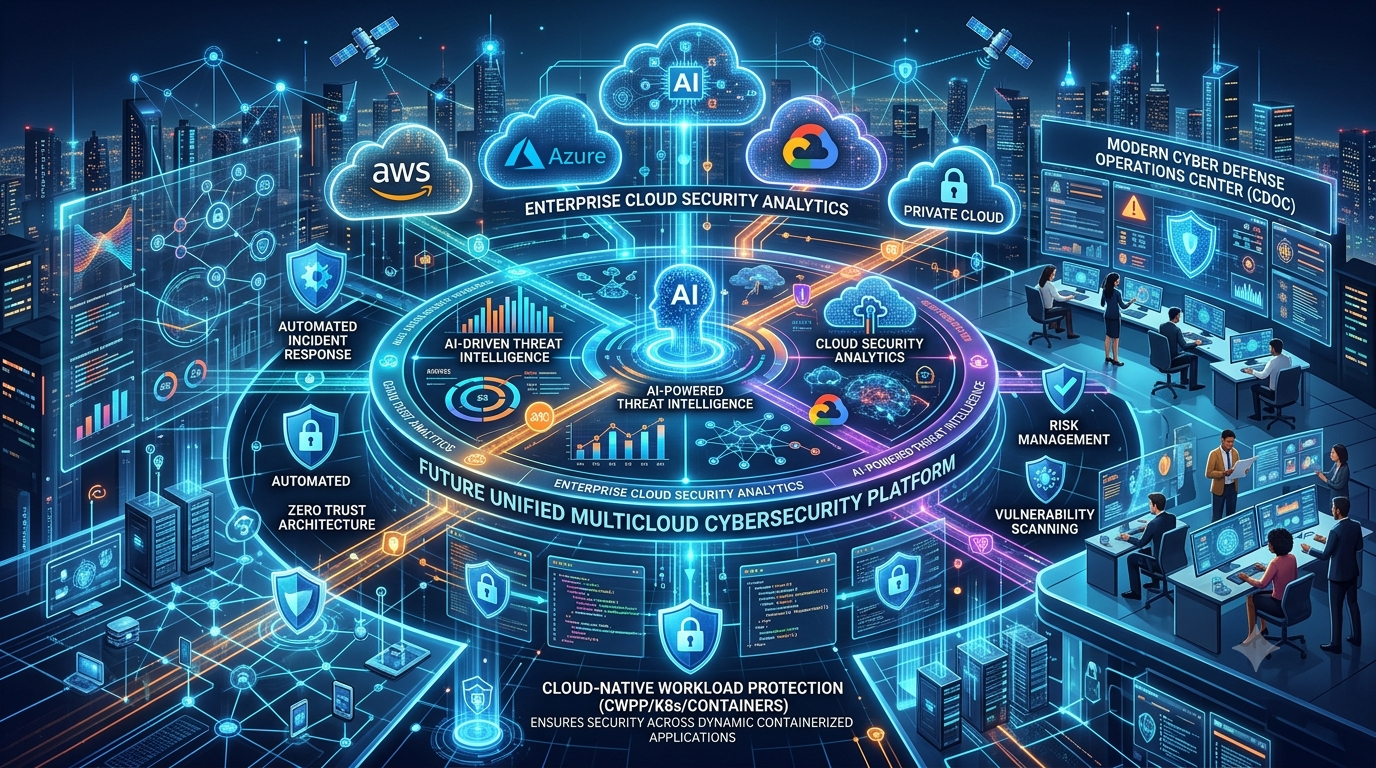
The future of enterprise technology is increasingly cloud-driven. Organizations are adopting multicloud strategies to improve agility, support innovation, and optimize business operations. Applications, workloads, and data are now distributed across multiple cloud providers, creating highly dynamic digital ecosystems that enable organizations to scale faster and respond more effectively to changing business requirements.
While multicloud adoption provides significant advantages, it also creates new security challenges. Security teams must protect users, workloads, APIs, applications, and data across multiple environments while maintaining compliance and governance standards. Traditional security approaches often struggle to keep pace with the complexity and scale of modern cloud infrastructures.
As cyber threats continue evolving, organizations are recognizing the need for a more integrated security strategy. Unified multicloud security brings visibility, analytics, threat detection, governance, and automation together into a centralized framework. This approach enables businesses to manage security consistently across environments while reducing operational complexity.
The transition toward unified multicloud security is not simply a technology trend. It represents a fundamental shift in how organizations approach cyber defense in an increasingly distributed digital world.
Modern enterprises operate across diverse cloud ecosystems that generate enormous amounts of security data every day.
Unified multicloud security helps organizations improve:
Traditional security models often create isolated security operations where teams struggle to connect information across environments.
Unified security platforms eliminate these challenges by providing centralized visibility and coordinated protection across cloud infrastructures.
Organizations that embrace unified strategies often improve both cyber resilience and operational efficiency.
The future of multicloud security is being driven by technologies that improve automation, intelligence, and visibility.
Key capabilities include:
Artificial intelligence plays an increasingly important role by helping organizations analyze security data at scale and identify emerging threats more quickly.
Automation reduces repetitive tasks and accelerates security operations, enabling teams to focus on higher-value activities such as strategic risk management and threat hunting.
Identity-centric security models are also becoming essential as organizations adopt Zero Trust principles to secure users and applications across cloud environments.
Together, these capabilities create a stronger and more adaptive cybersecurity framework for the future.
Unified multicloud security is rapidly becoming the future of enterprise cybersecurity. As organizations continue expanding cloud adoption, they need integrated security strategies capable of protecting increasingly complex digital ecosystems.
By combining centralized visibility, intelligent automation, identity-centric controls, and AI-powered analytics, businesses can strengthen cyber resilience while supporting innovation and growth.
Organizations that modernize their multicloud security approach today will be better prepared to manage tomorrow’s challenges and secure their digital future with confidence.